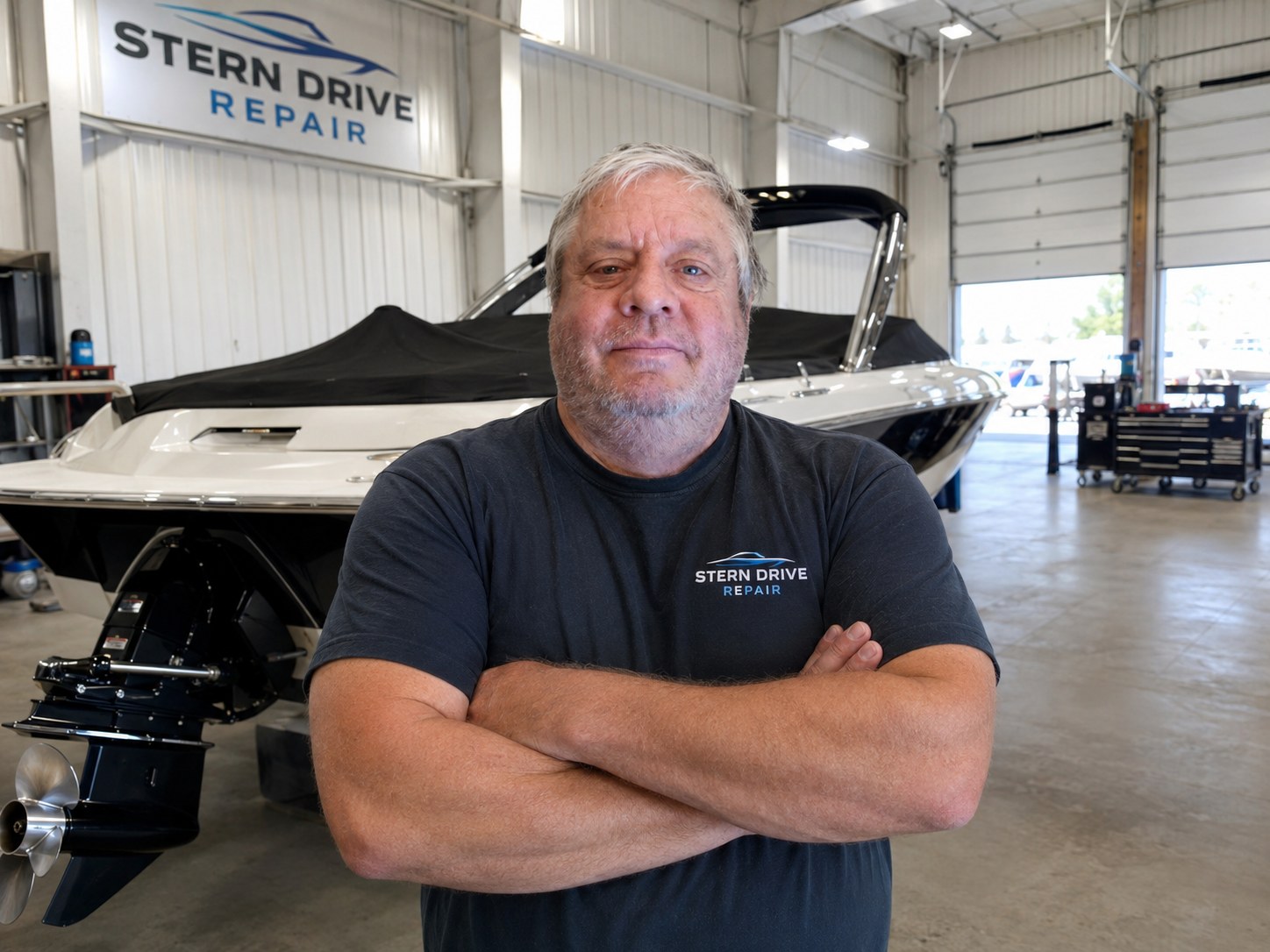
If there is no good I/O tech near you, mail the drive in. This is how a lot of the rebuild work happens: boat owners across the country pull the drive off the transom, crate it, and ship it to Brad. He rebuilds or repairs it in his own shop, pressure tests it, and ships it back ready to bolt on. You deal with one experienced tech the whole way instead of a rotating marina service counter.
When mail-in makes sense
- No sterndrive specialist within a reasonable drive of you
- Local marina quoted a rebuild but you want it done by a drive tech
- You can pull the drive yourself but not rebuild it
- A winter project where turnaround time is flexible
- A rare or older MerCruiser, OMC or Volvo drive local shops avoid
- You want one person accountable for the whole rebuild
How the mail-in process works
- Message Brad with the drive model, year and what it is doing
- Pull the drive off the transom, or have a local shop pull it
- Drain the gear oil and crate the drive on a small pallet
- Ship it freight or by carrier to the address Brad gives you
- Brad inspects, calls with findings and a firm price before work
- The rebuilt drive ships back pressure tested, with notes on what was worn
The fix and what to expect
Once the drive arrives, Brad tears it down, quotes the actual wear, and after your okay rebuilds or repairs it: bearings, seals, gears, water pump and shims as needed. It goes back together to spec, gets pressure and vacuum tested, and ships back to you crated the same way it came. You reinstall it or have your local shop bolt it on. Most mail-in drives turn around within one to two weeks of arriving, parts permitting, and you know the full cost before any work starts.
Pulling and crating the drive without damaging it
The part that scares people off mail-in is getting the drive off the boat, and it is more manageable than it looks. On a MerCruiser Alpha or Bravo it is six nuts inside the transom and disconnecting the shift cable and trim, and the drive lifts off the studs. Drain the gear oil first so it does not leak in transit, tie the drive to a small pallet or a stout box, and protect the driveshaft and trim rams. Brad will walk you through the specifics for your exact drive before you ship, and tell you what to leave attached so nothing gets bent.